When I set up the date with Al from Ebro Delta Birding for a full day tour of the Ebro Delta along the Catalonian coast of the Mediterranean Sea, he asked me, “Do you have a target bird?” “Flamingo,” was my response. He assured me that wouldn’t be a problem. I tried to imagine a place where flamingos were so common they wouldn’t be hard to find.
The Delta de l’Ebre or Ebro Delta, spans 320 square kilometers and is the largest wetland area of Catalonia. Much of the land is used for rice cultivation, (the short grain variety used in paella dishes), but it also supports aquaculture, salt extraction, fishing, recreation and tourism. I was there in mid-October (2025). It was a magnificent day! Imagine the brightest of autumn yellow suns. The summer heat had diminished but the incandescence had not. This light made the blues of the rice fields and the sea beyond iridescent. Imagine a wind that whipped an unseasonably warm breeze, unsettling the water, some birds using it to take flight, others bracing against it. Kite surfers enjoyed the force of those winds while classes of school children fought against it to stay upright on their bikes. Their oversized neon safety vests whipped in the wind like capes. The whole area lies flat; it’s simultaneously wild and managed. Inland are the hills of the Montsia Mountains, green with olive trees and studded with towering wind turbines at uneven intervals along the hills.
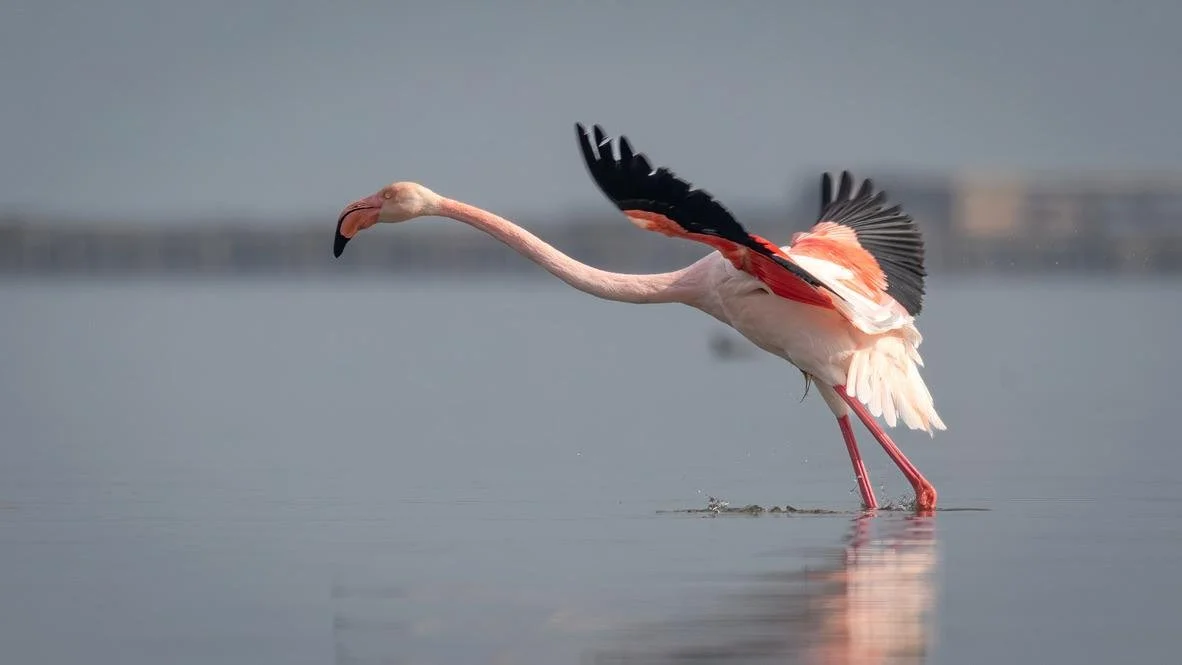
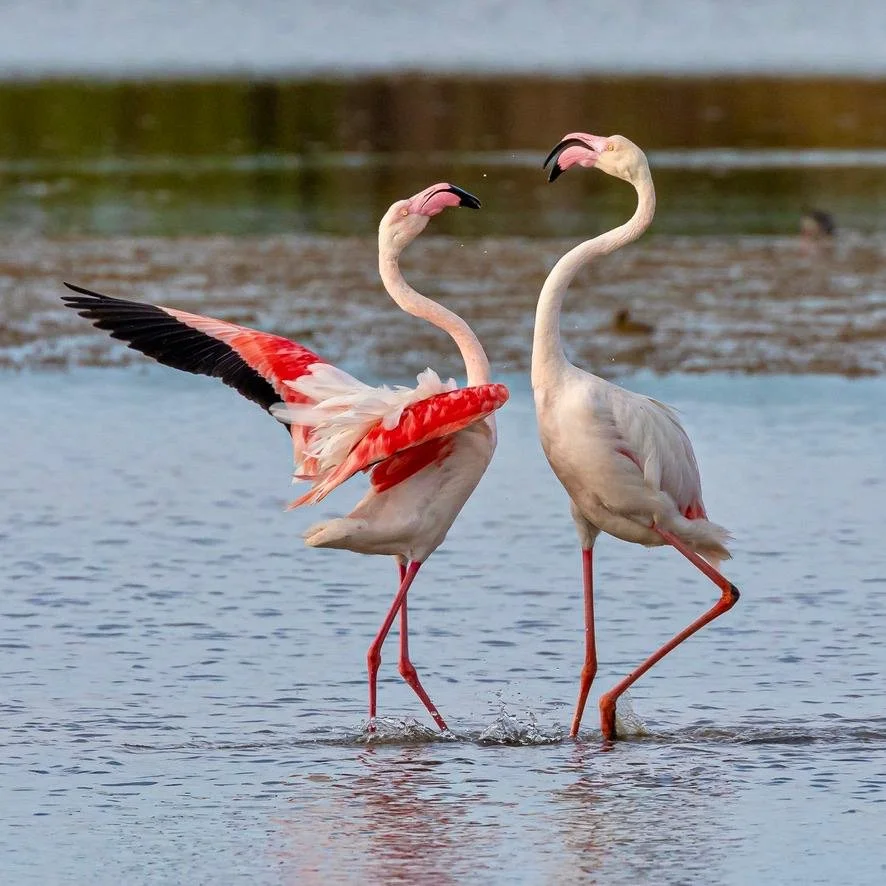
Adult Greater Flamingo (Phoenicopterus roseus) with spread wings and elongated neck wading knee deep in water. Photo Credit: Al Henderson, Ebro Delta Birding
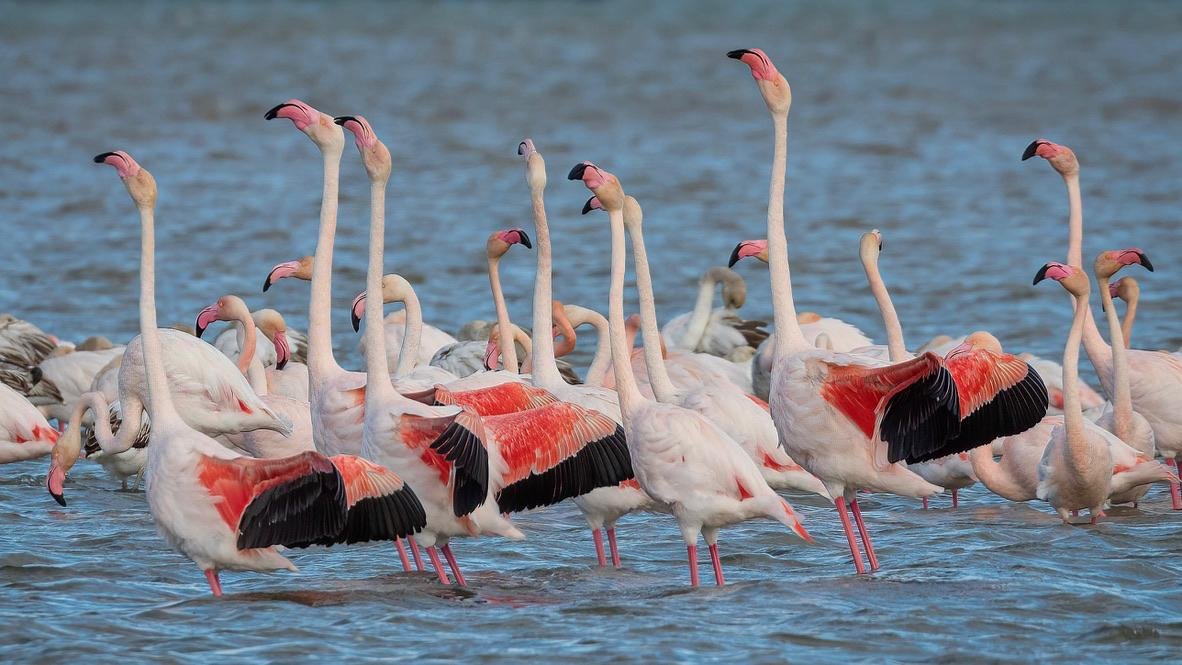
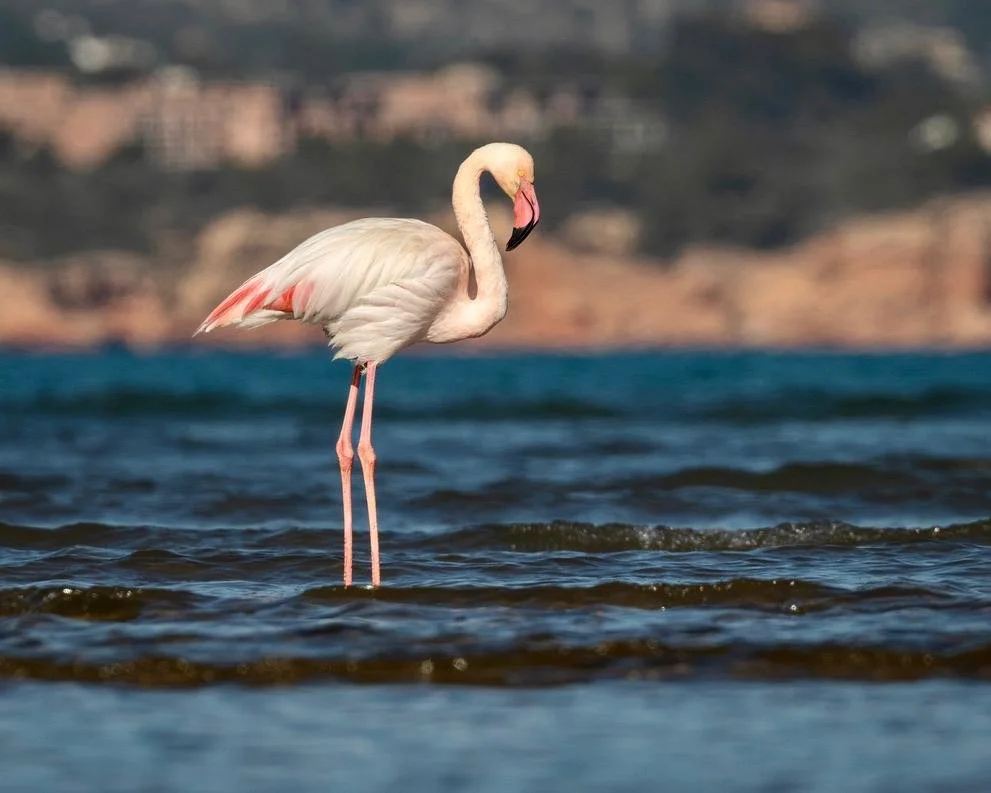
And imagine the deepest of flamingo pinks, only visible on the wings in flight or when outstretched while the large birds (4-5 feet tall) stood in the shallow lagoons of the delta. The pink was in contrast with the deep black on the wing edges and the bright white of the body feathers. A less remarkable shade of pink was visible on the long stick legs that matched the hue of the curved beak, also tipped with black.
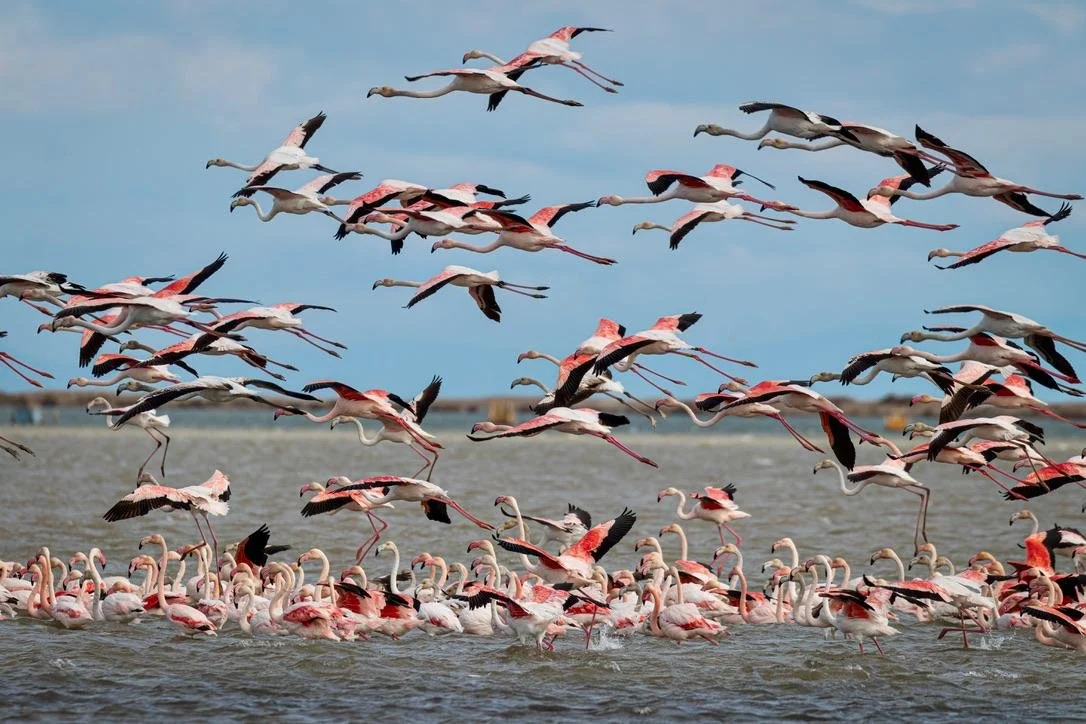
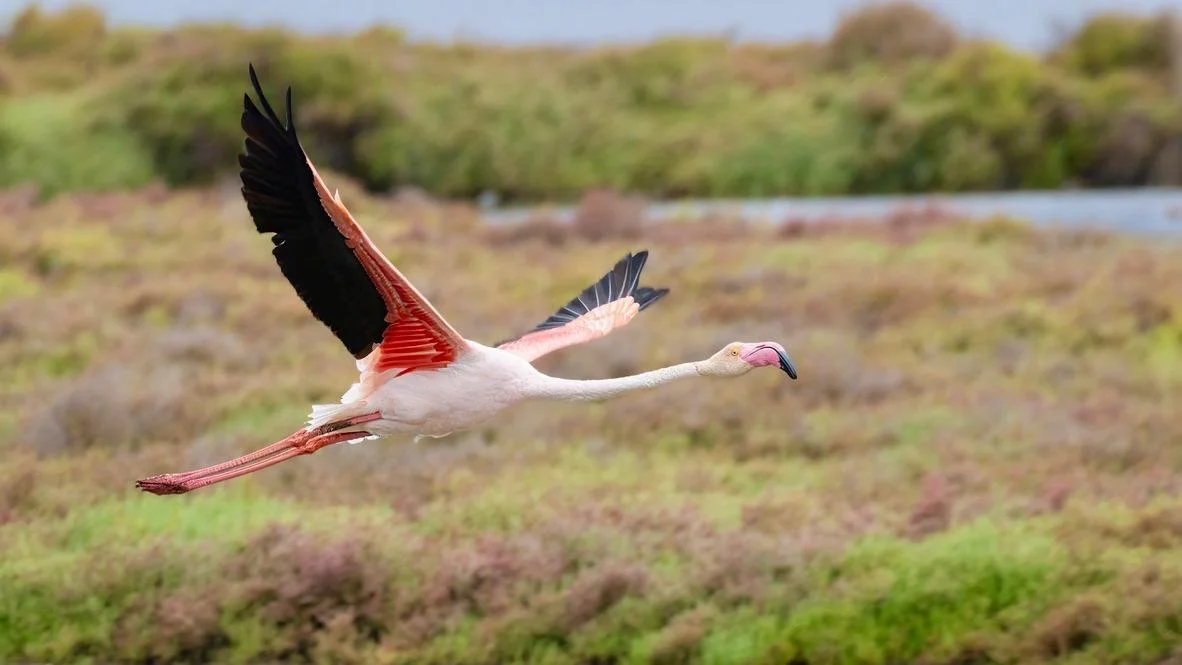
Many flamingos in flight, long necks and split legs with wide wing spans. Other flamingos wading in the waters below. Photo Credit: Al Henderson, Ebro Delta Birding
There were hundreds of these birds huddled together in various groups. Some would take off in flight, others we watched land. Their flight is all leg and neck, lacking grace, their honking calls even worse.
Al expertly directed his car between rice fields, along natural areas, to infrequent wood stands and out to the beach. We stopped at all of his favorite hotspots locating birds I had no expectation of seeing. I thought the search for the flamingo would occupy our time but we saw multiple groups throughout the day, it was incredible! (In 2021, 4303 nesting pairs were counted in the Ebro Delta)
One flock had a particular arrangement of birds. Juvenile flamingos haven’t eaten enough algae, crustaceans and brine shrimp in their short lifetime to develop the deep pink feathers obvious on adults, so discerning age in a flamingo is relatively easy. Especially as the birds line up in an ombre-style arrangement: the grayish-white youngsters on one end, vibrant pink adults on the other, with the gradually deepening pink tones of the “tweens” completing the full spectrum of aging coloration. Al confirmed that this type of flock arrangement was common. I was amazed!
Ecosystem Engineers
Flamingos play an outsized role in their environment, regardless if they are the year round residents of Catalonia, those of the Florida Keys or those of Chile. This is for several reasons.
A “flamboyance” is a large group of flamingos. They eat and they poop. Imagine hundreds of pooping flamingos in your rice paddie, enriching the soil at no cost to you, the rice farmer. It’s equally as nutritious in the wild. Nothing is wasted in nature.
Flamingos are foragers, using their oddly curved beak to filter crustaceans from the muddy substrate and brine shrimp and algae from the water column. To forage, flamingos perform a “feet-trembling” action where they agitate their legs repetitively while staying in one place, releasing food from the slimy substrate below. Their head is held underwater, ready for collecting foodstuffs. They can also dredge the substrate, where they perform a forward marching action, again, with their heads underwater. Either strategy releases organic matter buried in the muck below the water line which can make otherwise inaccessible nutrients available to themselves and other animals.
As flamingos wade through the waterways, their turbulent movements increase dissolved oxygen content of the water, improving water quality for aquatic invertebrates and vertebrates. This improves regional biodiversity!
Flamingos build nests of elevated mud, rocks and vegetation. A sizable nesting flock plays a role in shaping the coastline.
Protecting flamingos protects the habitat they occupy, for themselves and all of the wildlife in the delta.
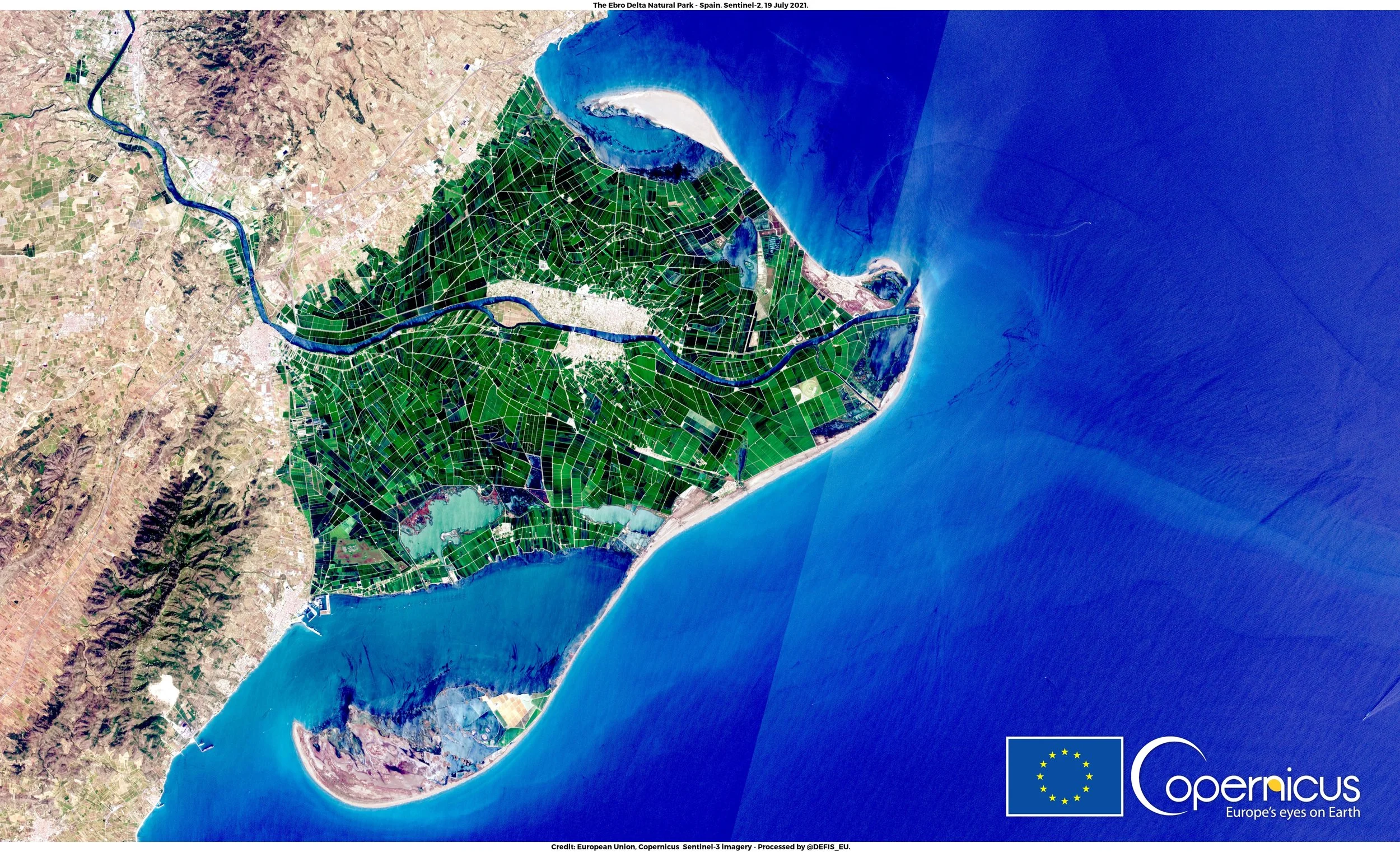
A satellite image of the Ebro Delta. Photo Credit: European Union, Copernicus Sentinel-2 imagery, 19 July 2021, Ebro Delta Spain
Climate Connections
The Ebro Delta is threatened by a warming climate.
The temperature of the Mediterranean Sea is climbing. July 2025 saw the highest measured average temperature at 26.9℃ (80.4℉). This is threatening aquatic life and can fuel stronger storms.
Sea-level rise means that natural sand barriers that protect the Ebro Delta are being overwhelmed, no longer able to hold the saltwater at bay. Salt water in rice fields is devastating for the local economy and for food supply chains.
The delta is shrinking. The culprits are rising seas and the 180 dams along the Ebro River that prevents the natural movement of Pyrenees sediment downstream. In a healthy system, upstream sediment should settle in the delta keeping the waters shallow which supports wildlife and buffers the effects of storms.
Protecting biodiversity in natural areas like the Ebro Delta protects human infrastructure and livelihoods. The delta is home to nearly 180,000 wintering birds and supports nearly 27,000 breeding pairs in the spring and summer. It supports mammals, reptiles, fishes and eels, water lilies and sea lavender among other endemic species.
Do Your Part: Start Small and Keep Going
While scientists and policymakers in Spain work to protect the delta, we need to be a part of the solution, even 4000 miles away. No act of sustainability is too small. Just start somewhere, to protect the places you love and mine:
Brown paper packages tied up with string….Brown butcher paper is recyclable! Reduce your waste load on Christmas morning by being mindful of how you wrap presents this year. I love butcher paper and reused bags and boxes.
Plant-based meal plans are more sustainable for the planet during the holidays and year round. Cutting down on meat is a great first step for those reluctant to cut out meat entirely.
Watch the thermostat. In the winter, reducing the heat by just one or two degrees will save you money as energy costs rise, more if you program your thermostat to reduce the indoor air temperature by five degrees or more during times when the house is asleep or empty. BONUS: these reductions will give everyone an excuse to wear their ugly holiday sweaters and will reduce your carbon footprint.
Thank you Al for a memorable day on the Delta and for sharing your incredible photos with me.