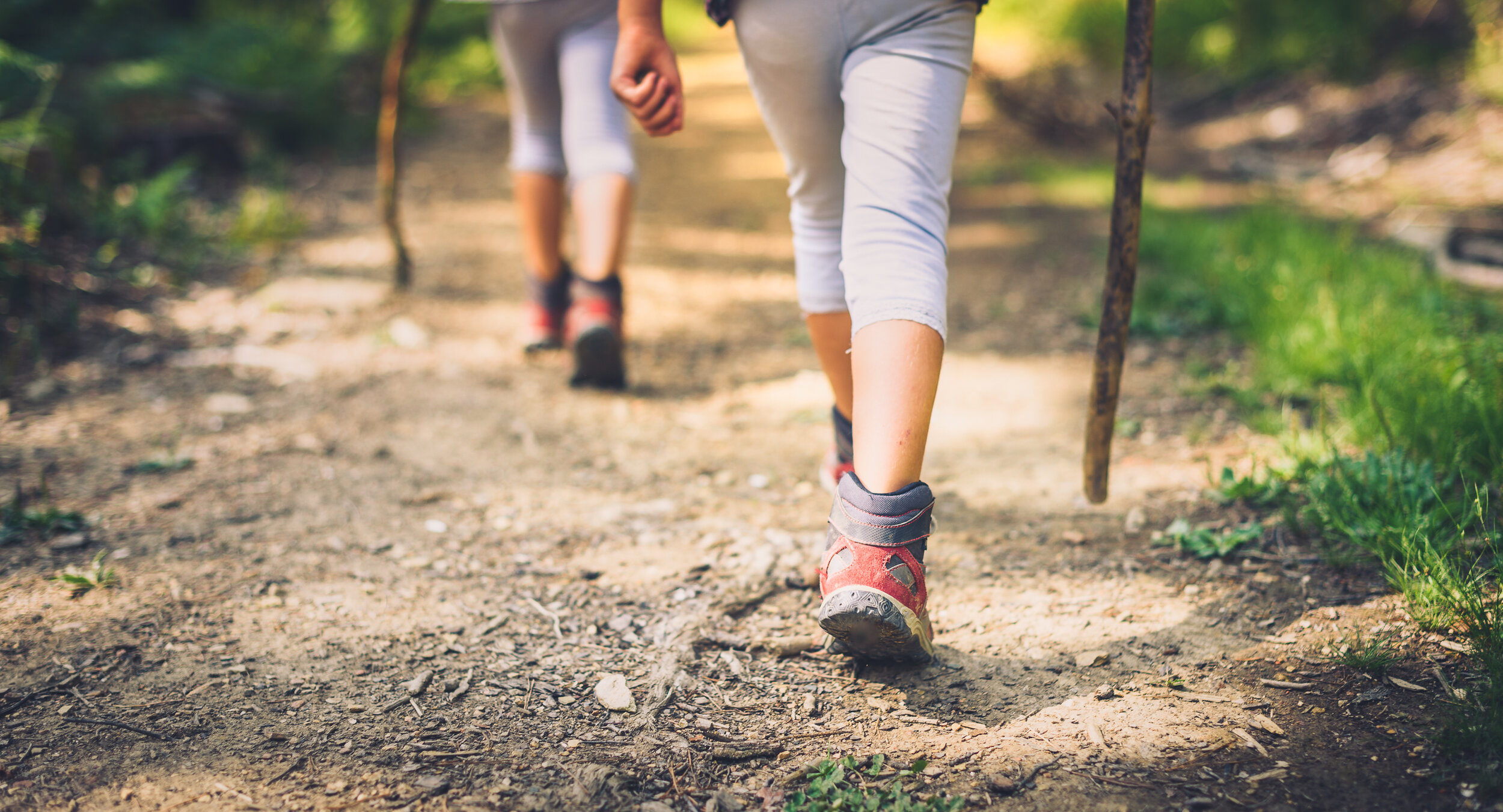
What’s Our Why? It’s easy to ignore the wildlife within a town’s limits, but bringing awareness opens up a whole new world. Nature calms a spirit, roots a busy body, inspires, heals and awakens the senses. It also provides opportunities for critical thinking, collaboration and creativity in exploration and play. This STEM program aims to teach young people how to safely explore the outdoors, how to observe and interact with nature and it encourages advocacy for our natural world through awareness of our local flora and fauna.
What?
Come play with us! Our extra-curricular STEM program is designed to get young people (ages 4-5 or grades 1-6) safely outdoors, exploring our natural environment. Through hands-on activities, outdoor exploration and play, students refine their science and problem solving skills, learn to use effective technologies like compasses, binoculars and microscopes, and engage in projects that foster creativity and an appreciation for our natural world.
Where?
We run programs at various sites around the Triangle. Currently, we provide after-school enrichment by working with schools who host a program site.
Contact rachel@dragonflynature.com to book a program at your education or daycare center, camp or elementary school.
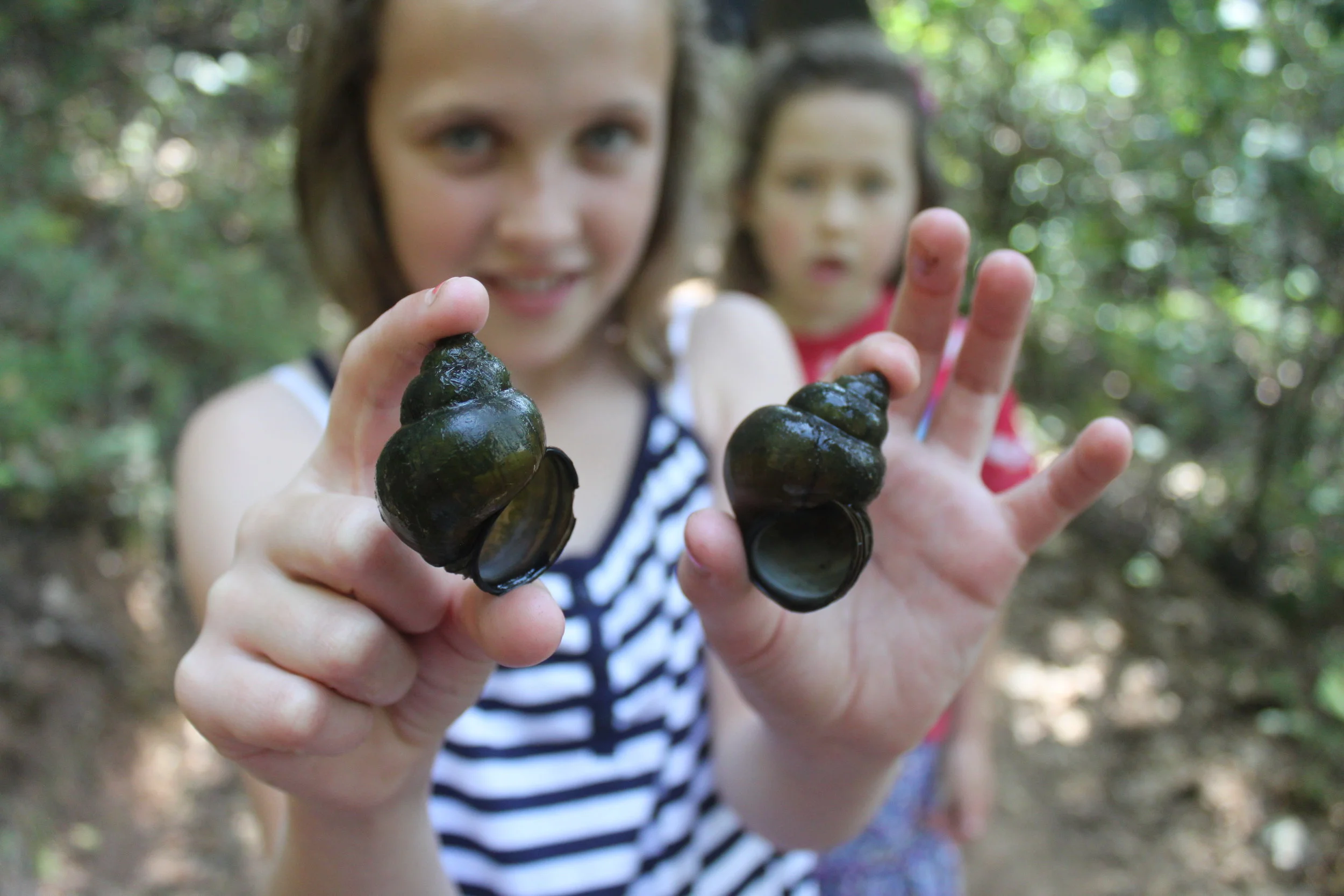
Two young girls with aquatic snails.
Who?
Our after school STEM programming is open to both preK and elementary age students. To accommodate developmental needs of participants, we run preK groups separately from elementary groups.
All programs held on school campuses are populated according to each school’s enrichment policies.

Child with a bright red leaf.
How?
Participants will learn naturalists skills through capture and release practice, proper identification of plants and animals, biological and chemical creek monitoring, the use of binoculars, micro-lenses and wildlife cameras, etc.
Each meeting will have an intended focus which may include, but is not limited to:
Bird Identification
Plant and tree identification
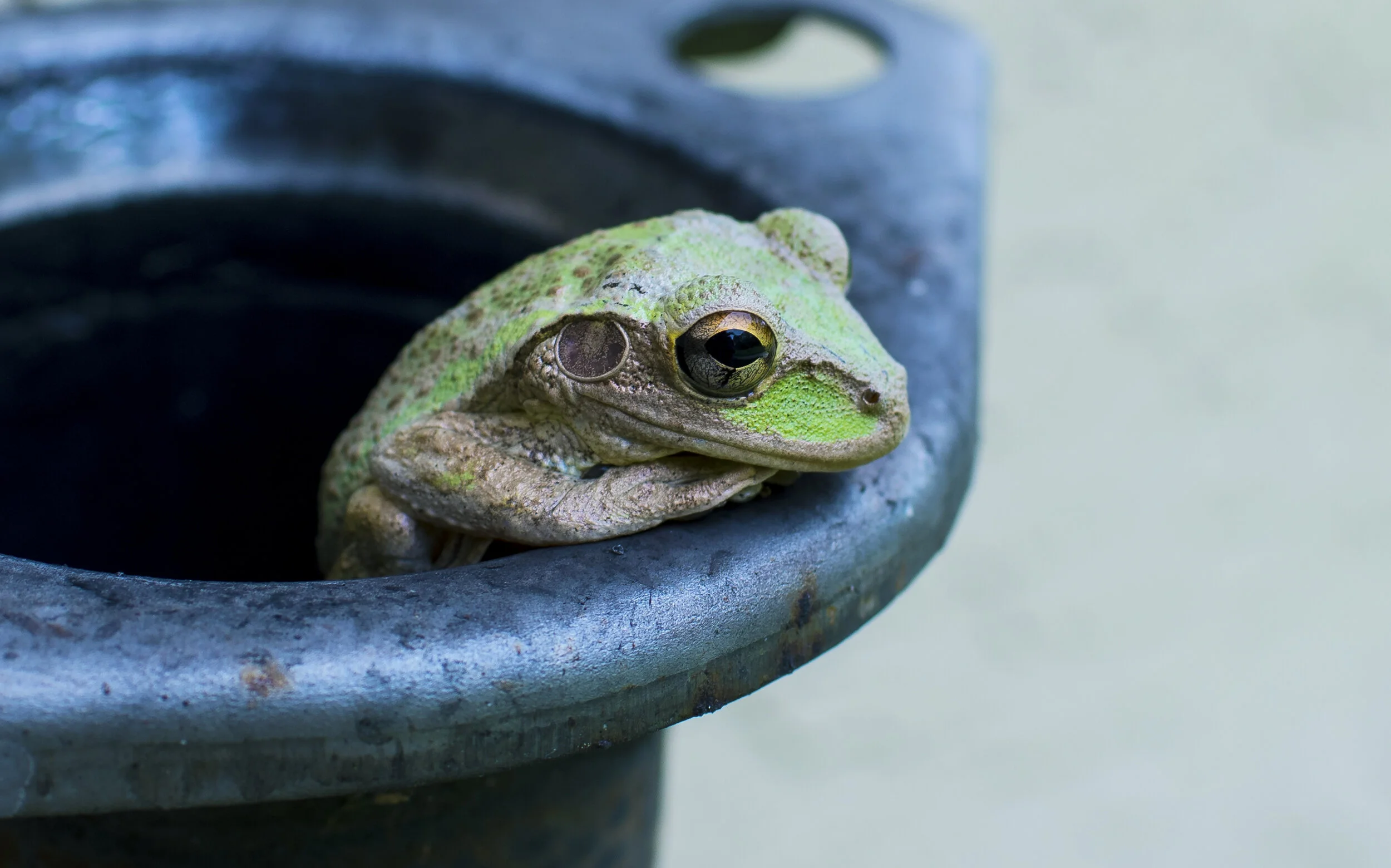
Herpetology (reptiles and amphibians)
Mammal tracking
Water quality monitoring + aquatic life
Insect Identification
Wildflower and local flora identification
The study of phenology
Weather
Participation in global citizen science projects
When?
We run programming during both the fall and spring semesters. The length of the program differs by site.
During summer sessions we run camps on-site as an extension of our after school programming.
Learn More
Have questions about the instructor? See our Meet Dragonfly Nature Programs page to learn more.
Want to learn more about local flora and fauna? Subscribe to our newsletter and blog.
Follow us on social media @dragonflynatureprograms, #dragonflynatureprograms