
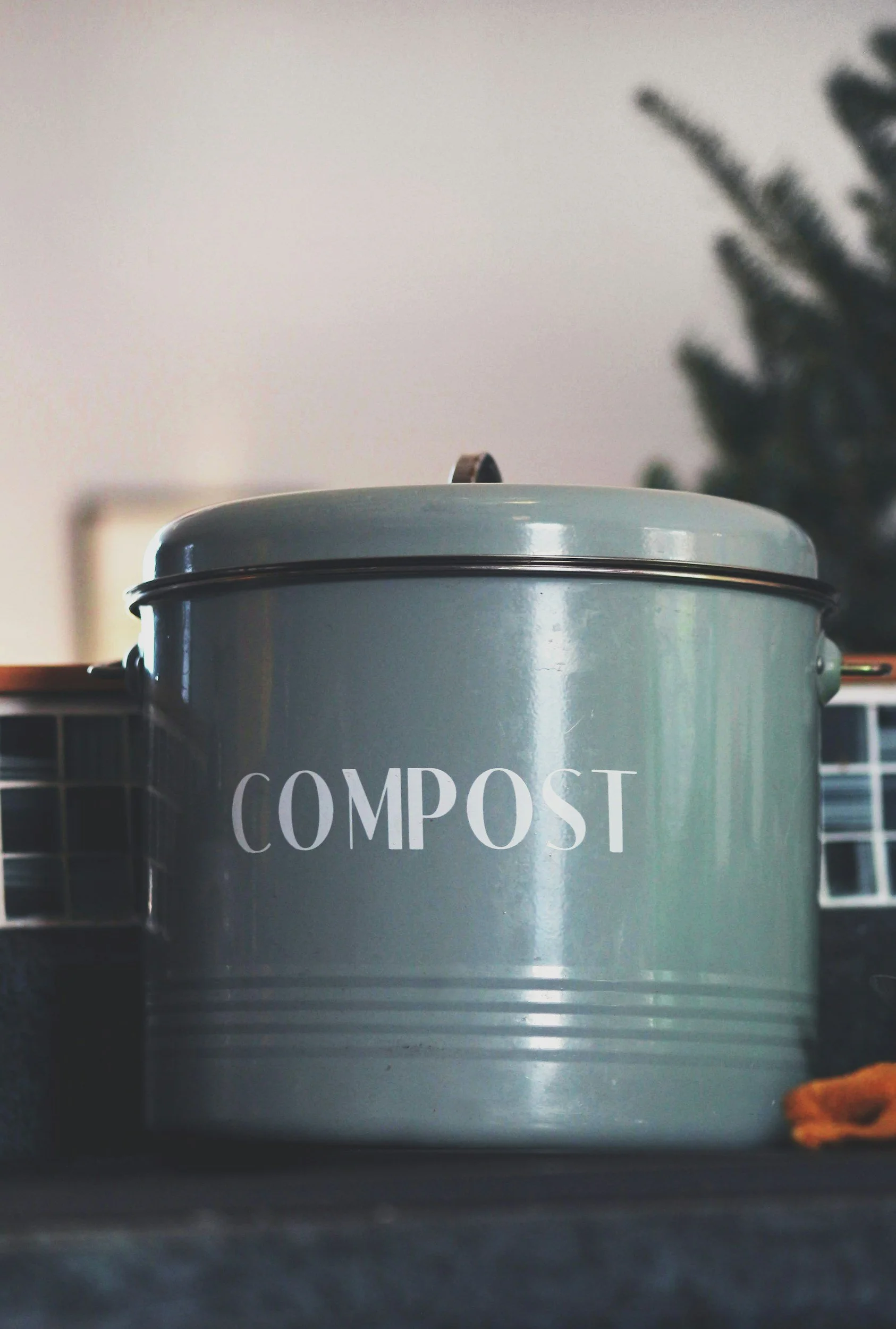
I’ve been composting for years, but it was a lackluster effort. Not because I didn’t want to do it right but running a business and a household with two kids and lots of 4 legged critters around here, I didn’t have the time. But my children are growing up and the critters are becoming less numerous and I happened upon a book at my local library, “The Compost Coach” by Kate Flood. It was a quick read and went through the numerous ways you can compost at home. That’s when I learned about the Bokashi method.
Why should we all be composting our food scraps in the first place? Organic matter buried in your plastic trash bag in the heap of refuse we call the landfill, is broken down to a terribly potent greenhouse gas: methane. Methane’s effects in the atmosphere are immediate. It holds more heat than carbon dioxide, although it doesn’t stay in the atmosphere quite as long. From start to finish our food system is a massive contributor to climate change from industrial agricultural practices to transportation, plastic packaging and food waste. Composting minimizes your personal contributions to the climate crisis.
Bokashi is actually anaerobic fermentation. Essentially, it ferments your waste, but doesn’t decompose it. This happens in the absence of oxygen. It does this with a bran additive you sprinkle in with every addition of waste. It is better than traditional compost in that you can add meat products, bones and dairy; waste products that you cannot add to home compost systems as they won’t break down. After a few weeks of this fermentation process you can add the Bokashi remains to your regular compost bin, stir and allow it to decompose. Composting is dependent on oxygen, so stirring weekly is important.
The benefits of Bokashi are that 100% of my household food waste stays in my yard and none of it is forming methane in the process. I have a steady supply of compost to use in my garden and the leachate that drips off the fermenting food scraps can be used as plant fertilizer when diluted and can even be safely poured down my household drains. Bacteria in the leachate eats away at the organic matter clogging my pipes and is non-toxic to use.
It’s been one year since I’ve begun this Bokashi adventure. It is no more time consuming than traditional composting (done well, I wasn’t doing it well before). I do have to buy the bran but I’ve only gone through 1½ bags this whole year. The upfront cost wasn’t terrible. I bought two paint buckets and a lid. I already had compost bins to use but I did splurge on a compost crank so I can turn my compost easily. (Once your waste is in the compost bin it needs oxygen to decompose so weekly turnings are necessary). The Bokashi bin smells like pickles if you’ve added enough bran and the nocturnal critters want no part of my compost heaps or the Bokashi buckets.
I’m not sure that Bokashi is for everyone but composting has to be. Ideally the communities we live in would supply composting services along with trash collection and recycling. But in the absence of sustainability leadership, we have to take matters into our own hands. And we are past the days when we can, each of us, sit back and hope some tree hugger will do so much good for the environment that they offset our own waste. Today is the day I stop suggesting we think about how we can help. IT’S TIME TO GET IN THE GAME. You, me, everyone has to do better, choose better, making time for acts that reduce our environmental impact and insist our families do too. (My kids and husband help with the Bokashi.) Engagement is now required. Welcome to the farside of climate change friends.
Check out Kate’s book. Consider a compost method that works for your family and lifestyle. Tell me about it or come on over and I’ll show you my system!